

The May 2026 IB exam session runs from late April through to mid-May and applies to students completing the IB Diploma Programme (DP) and IB Career-related Programme (CP) worldwide.
This guide contains the official May 2026 IB examination timetable. Helping you plan revision, manage workload, and avoid last-minute surprises. Use this page to check your subject exam dates, identify busy exam weeks, and plan your revision effectively.
All dates are taken from the official May 2026 IB examination schedule
When Do IB Exams Start in 2026?
The first IB exams in the May 2026 session begin on Friday 24 April 2026. Most written Diploma Programme exams begin on Monday 27 April 2026.
- The final exams take place on Wednesday 20 May 2026.
- There are no exams on Friday 1 May 2026.
This timetable applies to IB Diploma Programme and IB Career-related Programme students worldwide. Exact start times vary depending on your IB exam zone, but the dates are the same globally.
IB May 2026 Exam Schedule Overview
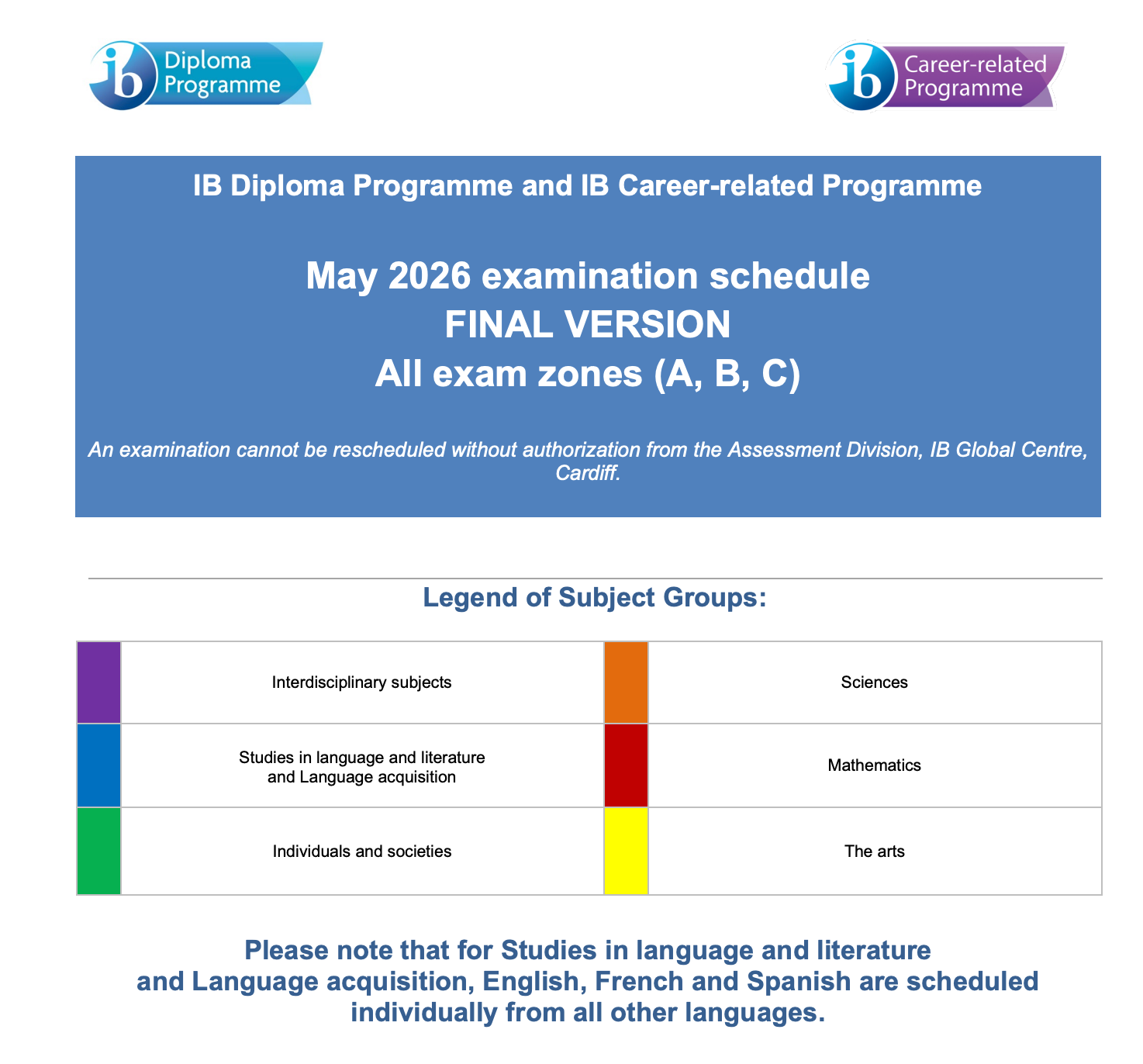
The May 2026 exams run across four weeks, covering all subjects in the IB Diploma Programme and Career-related Programme.
Key features of the schedule:
- Exams run Monday to Friday
- Morning and afternoon sessions
- No exams on 1 May
- Subjects are spread to reduce global clashes, not personal workload
This means some students will experience:
- Consecutive exam days
- Two exams in one day
- Heavy weeks followed by lighter ones
Understanding the structure early helps you plan around it instead of reacting to it.
Week-by-Week Breakdown of the IB May 2026 Exams
Week 1: Languages and Early Sciences
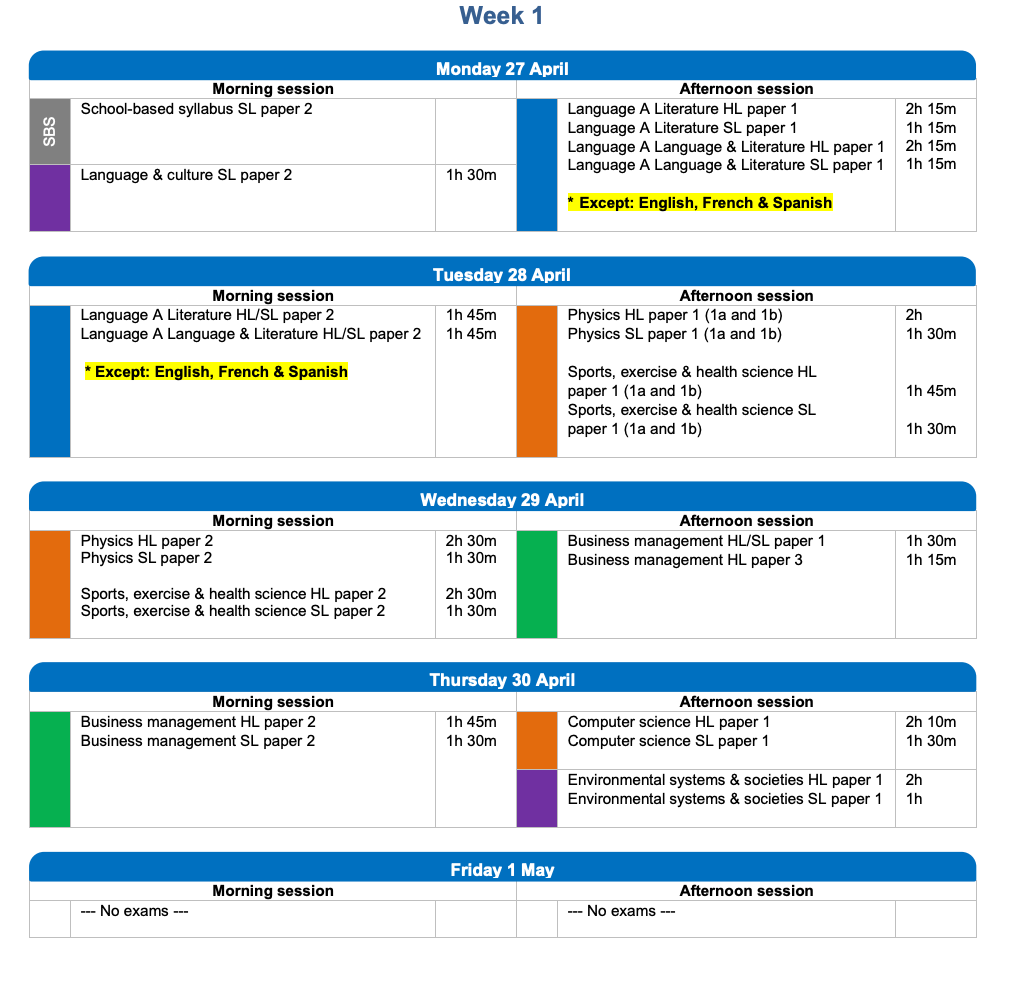
Week 1 focuses heavily on:
- Language A and B papers
- Early science exams such as Physics and Sports, Exercise and Health Science
- Business Management Paper 1
This week often feels deceptively manageable because:
- Many students underestimate language exams
- Revision momentum is still high
However, this is where poor planning can already create fatigue that carries into later weeks.
Week 2: Humanities and Computer Science
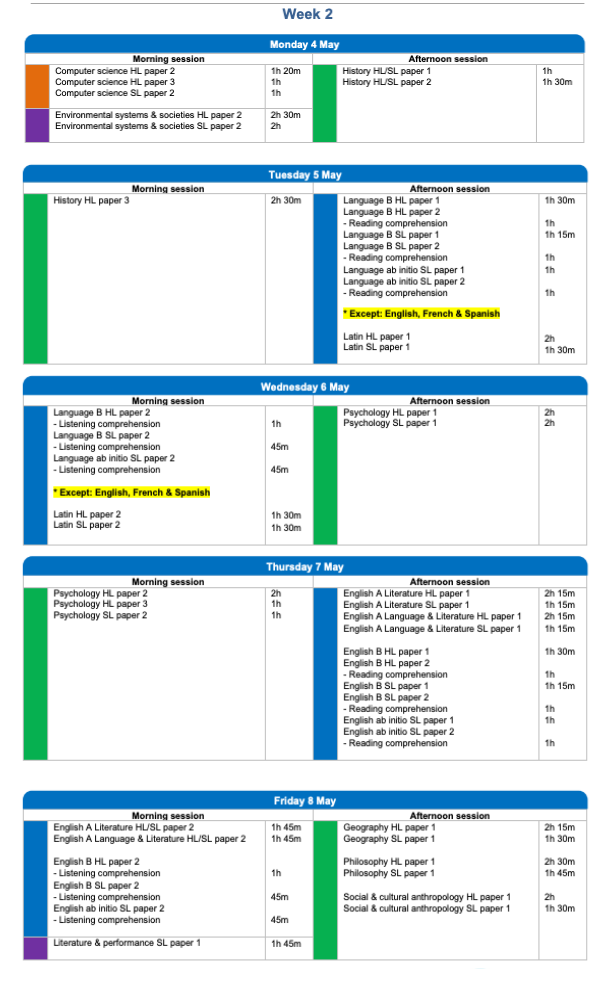
Week 2 introduces:
- History Papers 1 and 2
- Computer Science Papers
- Environmental Systems and Societies
- Some extended HL papers
Students taking History, ESS, or Computer Science often experience:
- Multiple long-answer papers close together
- Increased writing fatigue
This is where revision must shift from content learning to exam execution.
Week 3: Sciences and Mathematics Pressure Point
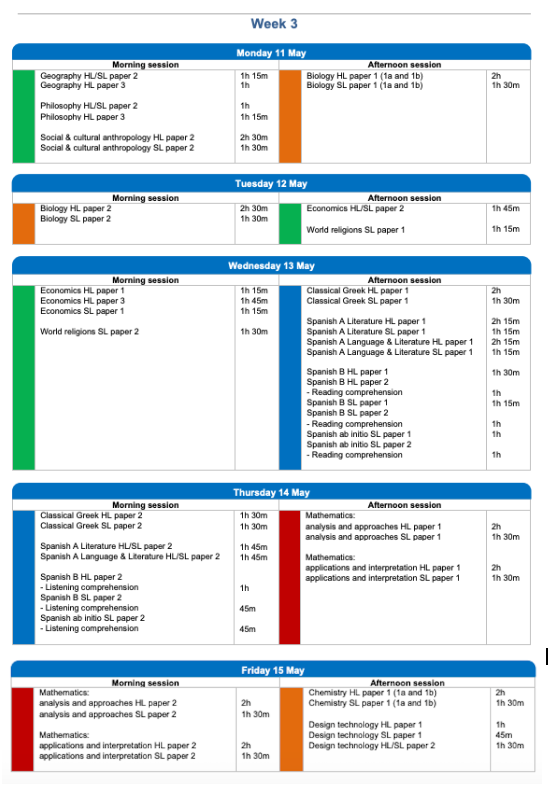
Week 3 is widely considered the most demanding week.
It includes:
- Biology HL and SL
- Chemistry
- Economics
- Mathematics AA and AI Paper 1
For many students, this is where:
- Revision overload peaks
- Sleep routines collapse
- Performance drops due to fatigue rather than lack of knowledge
This week must be planned weeks in advance, not improvised.
Week 4: Final Papers and Cognitive Fatigue
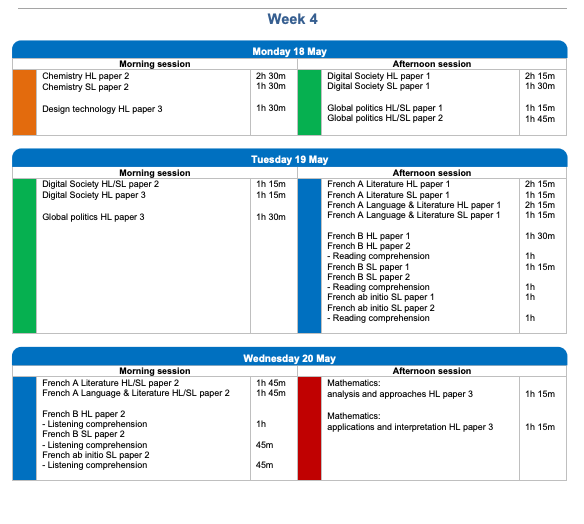
Week 4 includes:
- Chemistry Paper 2
- Global Politics
- Digital Society
- Mathematics Paper 3
- Final language papers
Although fewer exams occur, students are often mentally exhausted. This is where light, targeted revision and rest matter more than cramming.
Understanding IB Exam Zones and Start Times
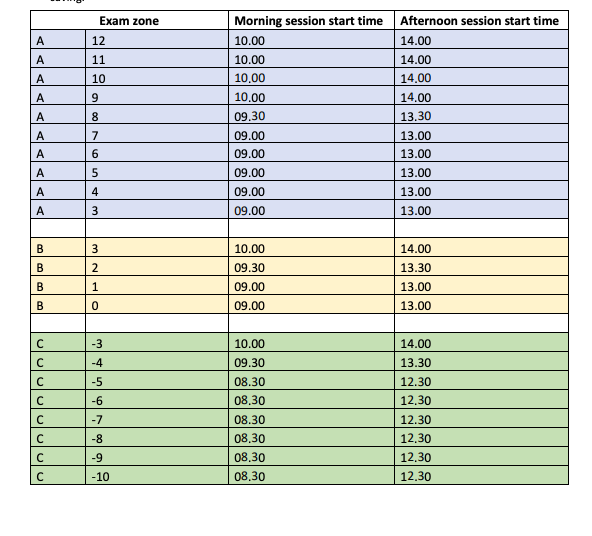
IB exams operate in exam zones (A, B, and C) to ensure fairness across time zones.
Important things to know:
- Morning and afternoon start times vary by zone
- Start times do not adjust for daylight savings
- You cannot choose your zone — it is assigned to your school
Misunderstanding exam times is a surprisingly common source of stress. Always confirm:
- Your exam zone
- Your local start time
- Your reporting time at school